

If a debt collector is calling you — or if you're a creditor trying to respond to a validation request — you need the right letter, sent the right way, at the right time. A debt validation letter template gives you the exact language required under federal law, so you're protected whether you're disputing a debt or confirming one.
This guide covers who needs this letter, what it must say, how to customize it for your situation, and why sending it as physical USPS mail isn't just recommended — it's often legally essential.
What a Debt Validation Letter Is (and Why It Matters)
Under the Fair Debt Collection Practices Act (FDCPA), consumers have the right to request verification of any debt a third-party collector claims they owe. This is called debt validation. Once you send a written request, the collector must stop all collection activity until they provide proof the debt is legitimate and the amount is accurate.
The stakes here are real. According to the Consumer Financial Protection Bureau's 2024 Fair Debt Collection Practices Act Annual Report, debt collection generates more consumer complaints than almost any other financial services category. Many of those complaints involve collectors pursuing debts that are incorrect, already paid, past the statute of limitations, or simply not owed by the recipient.
A properly sent debt validation letter stops collection activity cold — legally. But "properly sent" means more than drafting the right words. It means creating a paper trail that proves the letter was sent, when it was sent, and that it contained FDCPA-compliant language.
That's the function this template serves.
Who This Template Is For
Consumers (debtors): You've received a collection notice and want to verify the debt before paying, dispute an incorrect amount, or buy time while you assess your options.
Small business owners: A collector is pursuing a business debt, and you want to confirm the legitimacy of the claim before engaging further.
Creditors and collections teams: You need to understand what a valid consumer validation request looks like — and what your legal obligations are when you receive one. (More on the creditor perspective below.)
Law firms and debt resolution attorneys: You're sending validation letters on behalf of clients and need a reusable, FDCPA-compliant template you can customize at volume. If you're sending these at scale, the direct mail workflow built for law firms is worth understanding — especially for bulk validation campaigns.
The Debt Validation Letter Template
Copy and customize this template. Instructions for each section follow below.
[YOUR FULL LEGAL NAME] [Your Street Address] [City, State, ZIP Code] [Date]
[COLLECTION AGENCY NAME] [Collection Agency Street Address] [City, State, ZIP Code]
Re: Account Number [ACCOUNT NUMBER] — Request for Debt Validation Under 15 U.S.C. § 1692g
Dear [Collection Agency Name] / To Whom It May Concern:
I am writing in response to your [letter / phone call / notice] dated [DATE OF CONTACT], regarding an alleged debt in the amount of $[AMOUNT STATED]. This letter constitutes my formal written request for debt validation pursuant to the Fair Debt Collection Practices Act, 15 U.S.C. § 1692g.
I am hereby requesting that you provide the following:
- The full name and address of the original creditor
- The original account number assigned by the original creditor
- The complete account history, including all charges, fees, and interest applied
- A copy of the original signed credit agreement or contract
- Verification that your agency is licensed to collect debts in [YOUR STATE], including your license number
- The date the alleged debt was incurred and the date of last activity
- Proof that the statute of limitations has not expired on this debt
- Confirmation that you are authorized to collect this debt, including the name of the debt owner
Please be advised: Under 15 U.S.C. § 1692g(b), you must cease all collection activity — including phone calls, further correspondence, and any reporting to credit bureaus — until you have provided the requested validation.
If you cannot validate this debt, I request that you cease all collection efforts and remove any negative entries from my credit report immediately.
This is not a refusal to pay. This is a formal request for validation as protected by federal law.
Sincerely,
[YOUR SIGNATURE] [Your Printed Full Name] [Your Phone Number — Optional] [Your Email Address — Optional]
Do not include your Social Security Number or full date of birth in this letter.
Section-by-Section Breakdown
Your Identifying Information
Use your legal name and current mailing address. This tells the collector exactly who is disputing the debt and where to send their response. Don't include your Social Security Number — there's no legal requirement to provide it, and doing so creates unnecessary risk.
The Account Reference Line
The "Re:" line is critical. Include the account number the collector referenced in their notice. This prevents any ambiguity about which debt you're disputing and creates a clear reference point if the matter escalates.
The FDCPA Citation
Citing 15 U.S.C. § 1692g signals immediately that you know your rights. Collectors are required to send consumers a written validation notice within five days of initial contact. This letter is your formal response to that notice — and it must be sent within 30 days of receiving the collector's first communication to trigger full FDCPA protection.
Miss that 30-day window, and the collector can legally continue collection activity even while your validation request is pending. Don't miss it.
The Validation Requests (Items 1–8)
The FDCPA doesn't specify exactly what "validation" must include — courts have interpreted this inconsistently. Requesting all eight items above casts the widest net and puts the collector on notice that you're thorough. Specifically:
- License verification (item 5) catches collectors operating illegally in your state
- Statute of limitations (item 7) is essential for older debts — collecting on time-barred debt is an FDCPA violation in itself
- Ownership chain (item 8) matters for purchased debt, where the paper trail is often incomplete
The Cease Collection Activity Paragraph
This paragraph is not optional language — it restates the collector's legal obligation. Quoting the statute directly (§ 1692g(b)) is intentional. It removes any claim of ignorance on the collector's part.
The Closing Disclaimer
"This is not a refusal to pay" protects you from the collector mischaracterizing your letter as a dispute designed to avoid a legitimate debt. Courts have found this language useful in subsequent proceedings.
The 30-Day Rule: Getting the Timing Right
The FDCPA gives consumers 30 days from receipt of the initial collection notice to send a written validation request. This is the window that triggers the collector's legal obligation to halt collection activity.
After 30 days, you can still send the letter — but the collector isn't legally required to stop collecting while they verify. The letter still has value (it may prompt the collector to verify and communicate), but you lose the statutory protection.
This is why timing matters, and why physical mail with a postmark matters. A postmark is documented proof of when you sent the letter. An email has no equivalent legal standing in most debt collection disputes.
How to Use This Template: Quick-Start Guide
Step 1: Gather the collector's information from the notice they sent you — agency name, address, and the account number they referenced.
Step 2: Customize all bracketed fields. Double-check the date, the amount, and the account number.
Step 3: Remove item 5 (state license) if you're disputing a federal debt (student loans, federal tax debts) — that requirement applies specifically to third-party collectors.
Step 4: Print and sign, or use an online platform to compose and send it physically.
Step 5: Send via USPS Certified Mail with Return Receipt, or use a platform like WriteToMail to send it as a physical USPS letter without needing a printer or a post office trip. The letter gets printed, stamped, and delivered — and you have the send record documented.
Step 6: Keep a copy of everything. The letter, the tracking number, and any delivery confirmation.
Why Physical Mail Is Non-Negotiable Here
Email doesn't work for debt validation. Here's why.
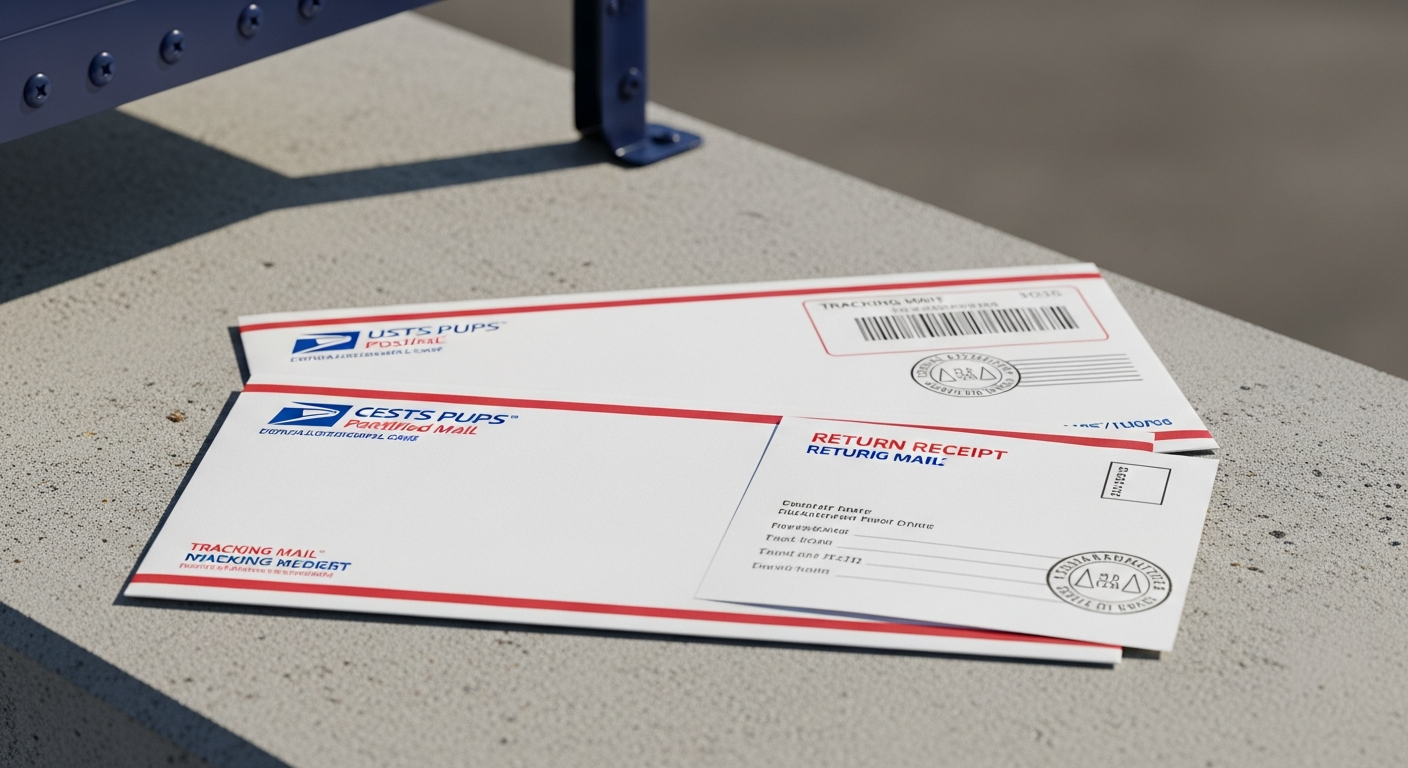
The FDCPA was written around written correspondence by postal mail. Courts consistently treat physical letters as more legally credible — especially when disputes escalate to litigation. A collector who claims they never received your validation request has a much harder time making that argument against a USPS Certified Mail return receipt than against a forwarded email chain.
Physical mail also creates a timestamped paper trail that proves you were within the 30-day window. That timestamp can be the difference between a collector being legally bound to halt collection activity or being free to continue.
There's a broader principle here. Certain legal situations simply demand physical mail — not because of tradition, but because it carries legal weight that digital communication doesn't replicate. Debt validation is one of the clearest examples.
If you don't have a printer, that's not an obstacle. WriteToMail lets you compose your letter online, upload your text, and have it physically mailed via USPS — postage included. No printer, no stamps, no post office. You can also send the letter without a printer by uploading a pre-written PDF directly to the platform.
Customization Tips for Different Use Cases
If you're disputing the amount (not the entire debt)
Add a paragraph after your validation requests:
"I am specifically disputing the stated balance of $[AMOUNT]. I believe the accurate balance is $[YOUR AMOUNT], based on [payment made on DATE / fees not agreed to / other reason]. Please provide a complete transaction history supporting the amount claimed."
If the debt is time-barred
Add this after item 7:
"I have reason to believe this debt may be outside the statute of limitations for [YOUR STATE]. Any attempt to collect a time-barred debt through litigation would constitute a violation of the FDCPA. Please confirm the date of last activity and the applicable limitations period."
If you're responding to a debt that isn't yours
Replace the opening paragraph with:
"I have received your notice regarding account number [ACCOUNT NUMBER]. I have no record of this account and do not believe I am the individual responsible for this alleged debt. This letter constitutes my formal request for validation, and I am requesting identity verification documentation proving the debtor associated with this account is in fact the undersigned."
If you're a creditor responding to a validation request
If you receive this letter from a debtor, your obligations are clear: stop collection activity and respond with documentation. A proper response includes the original signed agreement, complete account statement, chain of ownership documentation if the debt was purchased, and confirmation of your state licensing. Failure to respond or continuing collection activity without validating is an FDCPA violation — and that exposure is significant. The CFPB reports that FDCPA enforcement actions have resulted in millions in penalties annually.
How This Differs From a Demand Letter
A debt validation letter comes from the debtor to the collector — it's a request for proof. A demand letter runs the other direction: it's sent by someone owed money to demand payment or action. If you're the party owed money and need to formalize a payment request, understanding what a demand letter is and when to use one is a separate but related step in the collections process.
The two letters can work in sequence. A debtor might send a validation letter first, and if validation confirms the debt is legitimate, the creditor might follow up with a formal demand before escalating to small claims court.
Sending at Scale: Collections Teams and Law Firms
If you're managing a debt collection portfolio or handling validation responses for a legal practice, sending individual letters manually doesn't scale. Bulk mail campaigns via CSV upload let you send personalized, physical validation response letters to hundreds of debtors simultaneously — with variable fields like name, account number, and balance pulled directly from your spreadsheet. Each letter is printed and mailed individually via USPS First-Class Mail.
This approach maintains the physical mail standard required for FDCPA compliance while eliminating the per-letter overhead of printing, folding, stuffing, and stamping.
Sources
- Federal Trade Commission — Fair Debt Collection Practices Act (Full Text) — statutory basis for debt validation rights under 15 U.S.C. § 1692g
- Consumer Financial Protection Bureau — FDCPA Annual Report — consumer complaint data and FDCPA enforcement statistics
- CFPB — Debt Collection FAQs: Validation of Debts — official guidance on what debt validation notices must include
- FTC Consumer Advice — Debt Collection — consumer rights summary under the FDCPA including the 30-day validation window
- Cornell Law School — 15 U.S.C. § 1692g (LII) — full statutory text of the validation of debts provision