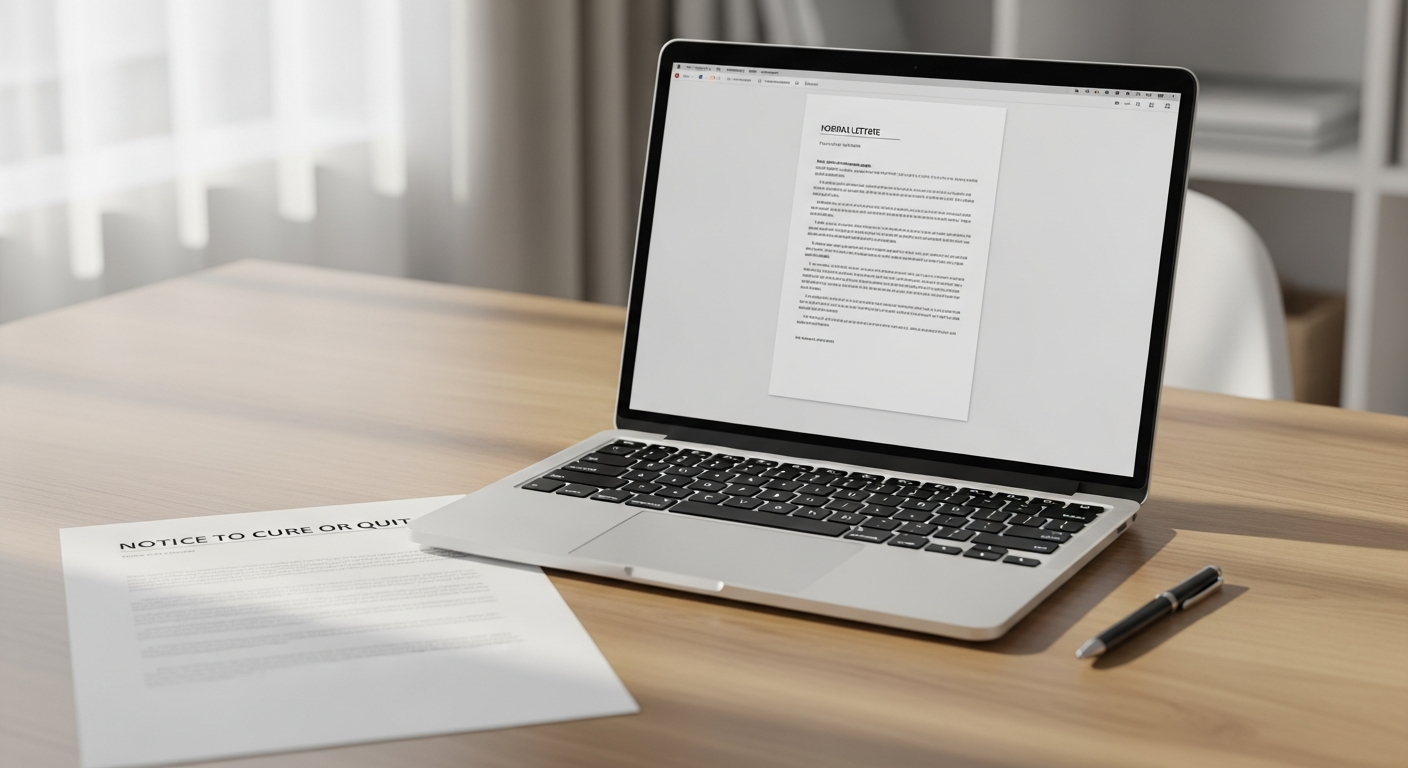
Most people haven't written a paper check in years. But paper checks haven't gone anywhere — landlords still require them, courts still accept them, and many vendors won't touch ACH or wire transfers. The problem is that the checkbook sitting in your desk drawer (if you even have one) feels like it belongs to 2003.
You can now send a check by mail online without touching a checkbook, visiting a bank, or owning a printer. Here's exactly how it works, who it's built for, and what keeps your payment data secure when someone else is doing the printing.
Table of Contents
- What "Send a Check by Mail Online" Actually Means
- Who Uses Online Check Mailing and Why
- How the Process Works, Step by Step
- Security: What SOC 2 Compliance Means for Your Check Data
- Online Check Mailing vs. Other Payment Methods
- Common Use Cases in Detail
- What to Look for in an Online Check Mailing Service
- Sources
- FAQ
What "Send a Check by Mail Online" Actually Means
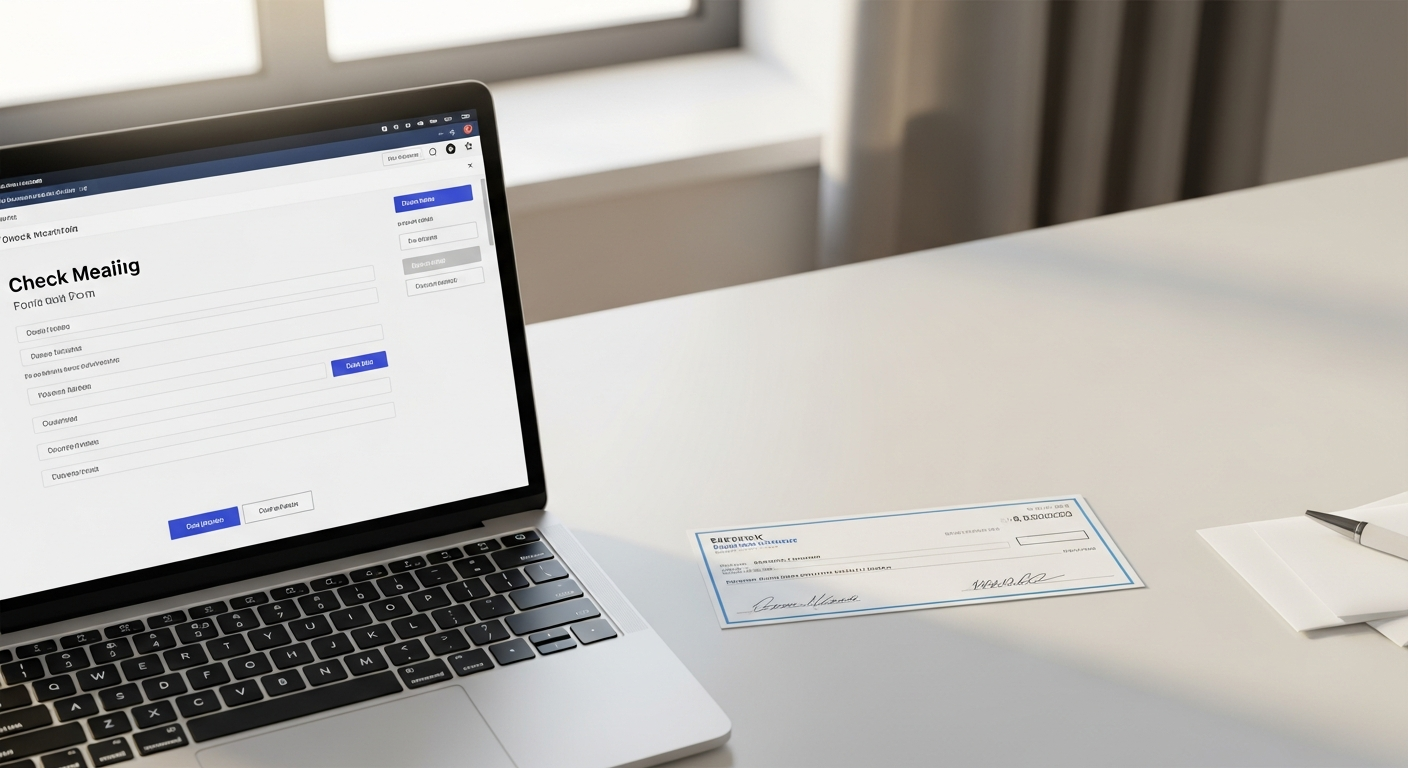
Online check mailing is exactly what it sounds like — you enter the payment details on a web platform, and a physical check gets printed and mailed to your recipient via USPS. No checkbook. No printer. No envelope-licking.
You don't need a bank account to issue the check through some platforms, and you never handle the physical check at all. The platform takes your input — payee name, amount, memo line, return address — prints a real paper check on your behalf, stuffs it in an envelope, and drops it into the USPS mail stream.
The result on the recipient's end is indistinguishable from a check you wrote yourself. They receive a physical check. They deposit it like any other check. Nothing about the process is unusual for them.
This isn't a workaround or a gimmick. It's a mature category of online mail service that businesses, law firms, and individual consumers use daily for payments that require a paper trail or simply can't be made electronically.
Who Uses Online Check Mailing and Why
The audience is broader than you might expect.
Individuals use it to pay landlords who refuse electronic payments, settle personal debts with a documented paper trail, or send a one-time payment without the hassle of ordering a new checkbook.
Small businesses use it to pay vendors, contractors, and freelancers — particularly when the payee is a sole proprietor who can't accept credit cards or prefers not to share bank details for ACH.
Law firms use it constantly. Settlement disbursements, client refunds, and retainer returns often require physical checks. According to the American Bar Association's 2023 Legal Technology Survey Report, physical mail and physical checks remain heavily embedded in legal workflows, especially in litigation and real estate practice areas.
Accounts payable teams use it as part of broader AP automation — batching check runs without printing anything in-house, which eliminates printer maintenance, check stock inventory, and the labor of stuffing and mailing.
The common thread across all these users: they need a physical check delivered by mail, and they'd rather not manage the logistics themselves.
How the Process Works, Step by Step
The workflow on platforms like WriteToMail is straightforward. Here's what actually happens:
Step 1 — Enter Payment Details You fill in the payee name, the payment amount, a memo line if needed, and your return address. This takes under two minutes for a single check.
Step 2 — Review and Confirm You review a preview of the check before anything is processed. This is your last chance to catch a typo in the payee name or amount.
Step 3 — Submit The platform queues your check for print production. A real paper check is printed on secure check stock at a compliant print facility.
Step 4 — Envelope and Mail The printed check is inserted into an envelope and entered into the USPS mail stream, typically via First-Class Mail. The recipient gets a physical check — usually within a few business days.
That's the entire workflow. No trips. No supplies. No coordinating with your bank. If you need to send checks to multiple recipients at once, platforms with CSV bulk upload capabilities let you batch the entire check run from a spreadsheet — each row becomes a printed check delivered to a unique address.
For a broader look at how these services handle all types of physical mail — not just checks — the complete guide to sending physical mail online covers the full landscape including letters, postcards, and legal documents.
Security: What SOC 2 Compliance Means for Your Check Data
This is the part people skip over until something goes wrong. Check data is sensitive — it includes your bank routing number, account number, and payee information. Any platform handling this data needs rigorous security controls.
SOC 2 (System and Organization Controls 2) is an auditing framework developed by the American Institute of CPAs that evaluates how a service provider handles customer data across five trust service criteria: security, availability, processing integrity, confidentiality, and privacy.
SOC 2 compliance isn't self-declared. It requires an independent third-party audit. A platform that has passed SOC 2 has been verified — not just promised — to meet specific data handling standards.
WriteToMail is SOC 2 compliant, meaning its printing and data handling processes have been externally audited. When you submit check details through a SOC 2-certified platform, the data is handled under controls designed to prevent unauthorized access, data leakage, and processing errors.
For context on what this means in practice: SOC 2 Type II audits review how a company's controls performed over a period of time (typically 6-12 months), not just whether controls existed at a single point. That's a meaningful distinction — it verifies sustained security practices, not a one-time snapshot.
If you're evaluating online check mailing services, SOC 2 compliance should be a non-negotiable requirement. Any platform touching financial data without it represents an unacceptable risk.
Online Check Mailing vs. Other Payment Methods
Why send a physical check at all when you could use Venmo, Zelle, ACH, or a wire transfer?
The honest answer: sometimes you have no choice, and sometimes a physical check is genuinely the better option.
| Method | Paper Trail | Bank Info Required | Works for Unbanked/Non-Digital | Legally Accepted Everywhere |
|---|---|---|---|---|
| Physical Check by Mail | ✅ Strong | Payer only | ✅ Yes | ✅ Yes |
| ACH Transfer | Moderate | Both parties | ❌ No | Mostly |
| Zelle / Venmo | Weak | Yes (account) | ❌ No | ❌ No |
| Wire Transfer | ✅ Strong | Both parties | ❌ No | ✅ Yes |
| Credit Card | Moderate | N/A | ❌ No | Limited |
Courts, government agencies, and many landlords legally require or contractually mandate payment by check. A settlement agreement might specify "payment by certified check or money order" — and you can't Zelle your way out of that clause.
Physical checks also provide a durable paper trail. A cancelled check — meaning a check that's been cashed and returned — is legally admissible proof of payment. That matters in landlord-tenant disputes, freelancer payment disagreements, and any context where "I paid you" needs documentation beyond a screenshot.
Common Use Cases in Detail
Freelancer and Contractor Payments
Many freelancers — particularly in creative fields, construction, and consulting — prefer checks over digital transfers. Some don't have business bank accounts set up for ACH. Others have had issues with chargebacks on card payments. A physical check keeps the transaction clean, provides documentation, and doesn't require the freelancer to share routing numbers.
Legal Settlements and Disbursements
Settlement checks are one of the most consistent use cases for online check mailing. Law firms handling personal injury, employment, or real estate disputes regularly disburse settlement funds to clients via check — often dozens at a time. Doing this manually (printing, signing, stuffing, mailing) is labor-intensive. Batch check mailing via CSV upload eliminates that bottleneck entirely.
For law firms already using online mail platforms for demand letters and legal notices, adding check disbursements to the same workflow is a natural extension. The guide for solo attorneys on scaling client mail covers how this fits into a broader digital mail workflow.
Vendor Payments and Accounts Payable
Accounts payable automation has largely shifted to digital, but a meaningful percentage of vendor payments still flow through paper checks. According to the Association for Financial Professionals' 2022 AFP Payments Fraud and Control Survey, checks remain one of the most commonly used B2B payment methods in the United States, even amid the rise of digital alternatives.
For AP teams, outsourcing check printing and mailing to a platform eliminates the cost of check stock, printer maintenance, and staff time. It also creates a consistent, auditable process.
Landlord-Tenant Situations
Some lease agreements explicitly require rent paid by check. Some landlords don't accept electronic payments or don't have digital payment infrastructure set up. Online check mailing solves this without requiring the tenant to maintain a checkbook or make a trip to a bank branch.
If you're navigating landlord-tenant correspondence more broadly — notices, demands, or lease communications — the legal guide to landlord-tenant notices sent by mail covers the physical mail requirements that often accompany these situations.
One-Time Personal Payments
Paying a contractor for a home repair, reimbursing a family member for a shared expense, or settling a small claims judgment — these are all cases where a one-time check makes sense and buying a box of checks to send a single one doesn't.
What to Look for in an Online Check Mailing Service
Not all platforms are equal. Here's what actually matters when choosing one:
SOC 2 Compliance — Already covered above, but worth repeating: this is a baseline security requirement, not a bonus feature.
USPS First-Class Mail delivery — Some platforms use slower or less reliable delivery methods. First-Class Mail is the standard for time-sensitive payments.
No-minimum sending — You should be able to send a single check without committing to a volume tier. Platforms that require bulk minimums aren't built for individual or occasional use.
Bulk/batch capability — On the other end of the spectrum, if you're running AP or disbursements at scale, CSV upload with variable data fields is essential. The ability to send bulk mail online without going to the post office should be a core feature, not an enterprise add-on.
Preview before sending — Any platform worth using lets you review the check before it's printed. Errors on a physical check — wrong payee name, wrong amount — can't be recalled after they're mailed.
Clear pricing — Per-check pricing with no hidden fees is the standard you should expect. Watch for platforms that charge separately for postage, envelopes, and handling — these add up fast.
Sources
- American Bar Association — 2023 Legal Technology Survey Report — cited for the continued role of physical mail and checks in legal workflows
- AICPA — SOC Suite of Services — definition and framework for SOC 2 compliance
- Association for Financial Professionals — 2022 AFP Payments Fraud and Control Survey — cited for checks remaining a common B2B payment method
FAQ
Do I need a checkbook to send a check by mail online?
No. Platforms like WriteToMail handle check creation entirely on their end. You provide the payment details — payee name, amount, memo, return address — and the platform prints and mails the physical check. You never need to touch a checkbook or visit a bank.
Is it safe to enter check payment details online?
On a SOC 2-compliant platform, yes. SOC 2 certification requires third-party audits of data handling practices, which verify that your financial information is processed under rigorous security controls. Always confirm a platform's compliance status before submitting sensitive data.
How long does it take for the check to arrive?
Delivery timelines depend on USPS First-Class Mail, which typically delivers in 1-5 business days within the continental United States. The check is usually printed and entered into the mail stream within one business day of your order.
Can I send multiple checks at once?
Yes. Platforms that support CSV bulk upload let you send a batch of checks from a spreadsheet — each row maps to a unique recipient, address, and payment amount. This is particularly useful for law firm disbursements, AP check runs, and contractor payroll.
What does the check look like to the recipient?
The recipient receives a physical paper check indistinguishable from one you would have written and mailed yourself. They deposit it through any normal channel — bank branch, mobile deposit, ATM. No special handling required on their end.
Can I send a check to someone who doesn't use digital banking?
Yes. That's actually one of the strongest use cases for physical check mailing. The recipient doesn't need internet access, a digital payment account, or any special setup. A paper check works for anyone with access to a bank or credit union.
What information do I need to send a check online?
At minimum: the payee's full name, their mailing address, the payment amount, and your return address. Some platforms also let you add a memo line. You do not need to provide your own bank account details to use a platform like WriteToMail — the service handles the check issuance independently.
How is online check mailing different from just doing a bank wire or ACH?
Wire transfers and ACH require both parties to share bank account information and involve direct account-to-account transfer. A mailed check only requires the payer to initiate — the payee simply deposits a paper check through their normal banking. Physical checks are also more universally accepted and provide a paper trail that digital transfers sometimes lack in legal contexts.
Sending a check by mail used to mean finding your checkbook, confirming you had stamps, and either trusting the mail slot in your door or making a post office run. None of that is necessary anymore. Platforms built for online check mailing handle every step after you type in the details — and on a SOC 2-compliant platform, they do it without compromising the security of your payment data.
If you're already sending physical mail online for letters or legal documents, adding check mailing to that workflow is a natural next step. The same platform, the same process, and the same USPS delivery — just a check in the envelope instead of a letter.